Dispatch Interval from Home Floor plots the time between successive car departures in the up direction from the main home floor. This is reported in five-minute intervals across the duration of the simulation.
The dispatch interval is calculated by taking 300 seconds (5 minutes) and dividing it by the number of dispatches from the home floor during that period. The fewer the dispatches, the larger the interval; the more frequent the dispatches, the smaller the interval.
This graph can be viewed for any individual run or based on an average of all runs.
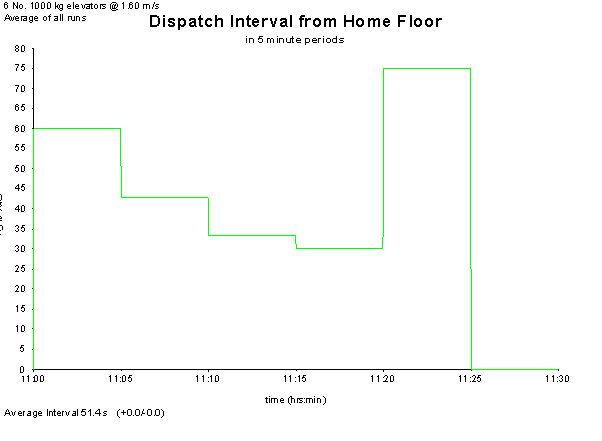
The interval metric is included in Elevate's simulation output primarily to help validate consistency between round-trip time calculations and simulation behavior. See: The Application of Simulation to Traffic Design and Dispatcher Testing.
However, the interval is a limited and sometimes misleading measure, especially in complex or modern scenarios. Some limitations include:
- During light or interfloor traffic, cars may not depart regularly from the home floor, resulting in long intervals even when passenger waiting times are low.
- With multiple entrance floors, a car may bypass the home floor while another is loading, skewing interval data.
- In destination control systems, passengers are not always allocated to the next departing car from their floor, making interval a poor indicator of service quality.
- Short intervals can occur even when queues exist; if elevators are full, some passengers may need to wait through several intervals before boarding.
Simulation provides a more flexible and accurate analysis of performance than interval alone. Metrics such as average waiting time are generally more reliable indicators of service quality.
Was this article helpful?
That’s Great!
Thank you for your feedback
Sorry! We couldn't be helpful
Thank you for your feedback
Feedback sent
We appreciate your effort and will try to fix the article